
How I Choose My Victorians
How Lady Margaret decides which houses are truly Victorian: the national standard, three Victorian features, and two inspections of every photograph.

Dearest reader, a great many houses call themselves Victorian. Rather fewer deserve the name. Before any lady is introduced in these pages, she must pass my inspection, and I am a stickler. Here, plainly, is how I choose.
Hear me read this
First, her year
One never asks a lady her age, darling. Houses are the exception, and I make it shamelessly: before I look at a single bracket, I ask hers, and unlike the rest of us, she is not permitted to round down. The Victorian era runs from 1837, when Queen Victoria came to the throne, to about 1915, when the last of the Victorian styles gave way to the bungalow and the Foursquare. A lady built after that, however much lace she wears, is a modern house in costume, and I do not introduce her. Her listed year is the first thing I check and never the only one: for a house this old it is often a careful guess, so she must also prove her age in her roof, her walls and her trim. When her year sits a little outside the era, I say so plainly in her review.
The standard I follow
I did not invent my own rules out of thin air. I follow the national standard used by preservation professionals across the country: the guidance of the National Park Service for the National Register of Historic Places, chiefly National Register Bulletin 15, on whether a house still shows her style, and Bulletin 16A, which gives the accepted names and descriptions of the styles, together with the published style guides of the state historic preservation offices. To that standard I add a few touches of my own, and every one of them makes me stricter, never kinder: at least three Victorian features on every lady, two separate inspections of every house, and three separate checks of every word I write about her. I keep to the standard as faithfully as I am able. I am a devoted student of these ladies, darling, though never an infallible one, for old houses keep their secrets well. Should you ever spot something I have missed, do write and tell me, and I shall happily look again.
I judge only the lady herself, and only from the outside
A style is worn on the outside: in the roof, the walls, the windows and the trim. So I look at the house herself and nothing else. Not the charming house next door, not the handsome street, not a view from the sky, and never the listing's own description of her style, for estate agents are generous with the word "Victorian". Her interiors may delight me, and I shall tell you all about them, but they never decide her style.
I must see her clearly
I study every outside photograph, not merely the first. A palm or an old oak in front of her is no disgrace, provided enough of her and her trim can still be seen in one photograph or several together. But if I cannot see a feature clearly, I do not count it, and I never guess.
She must show her defining feature
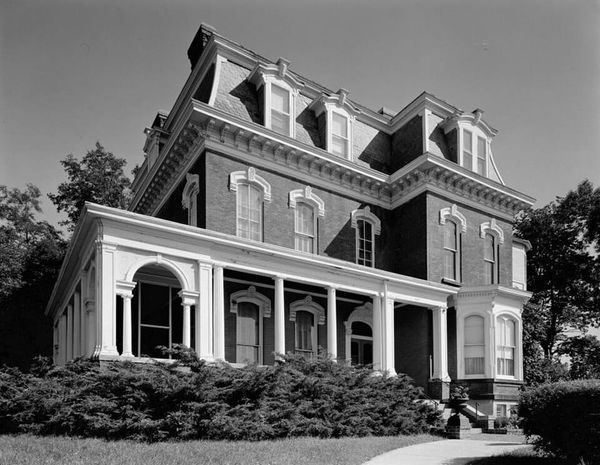
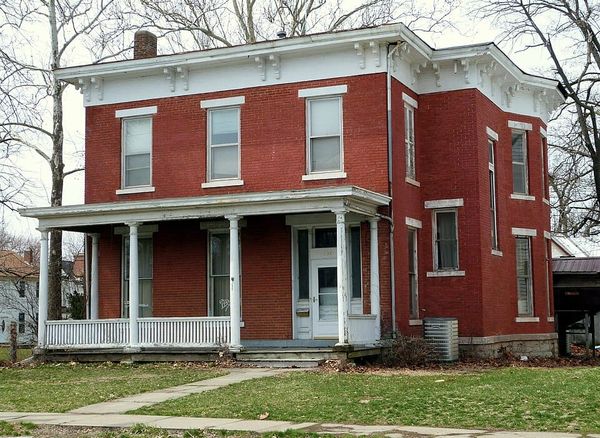
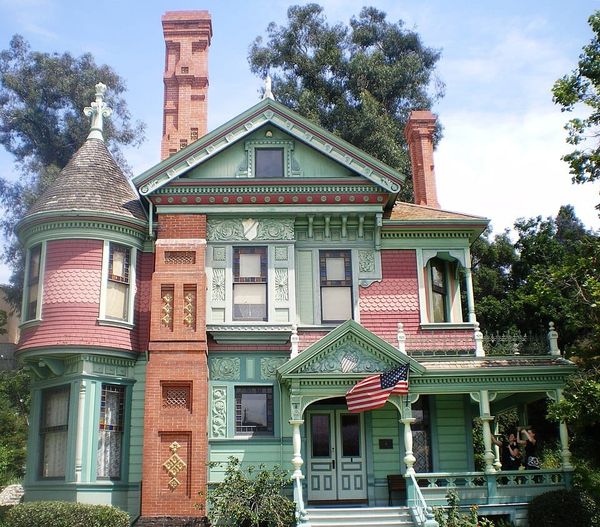
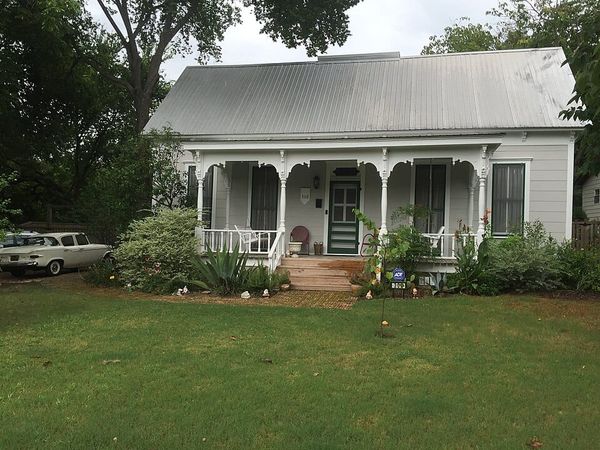
Each Victorian style has one feature that settles the question. A mansard roof for a Second Empire. A low roof on wide, bracketed eaves for an Italianate. An irregular front under a steep, busy roof for a Queen Anne. Victorian trim on a simple farmhouse shape for a Folk Victorian. If I cannot see that feature, I do not give her that name.




She must wear at least three Victorian features
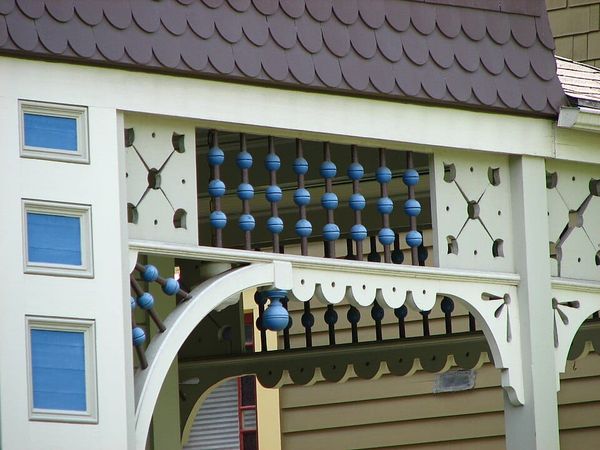
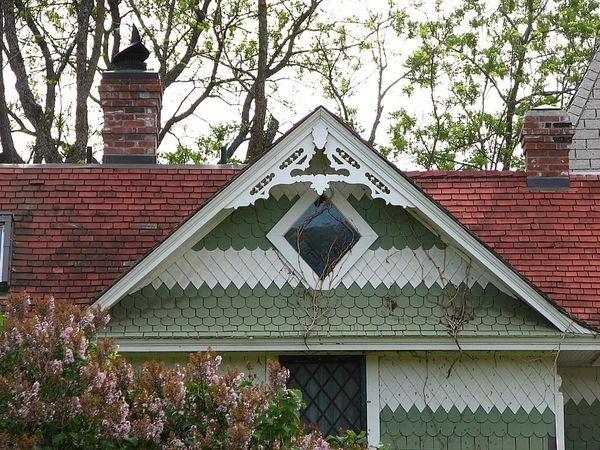
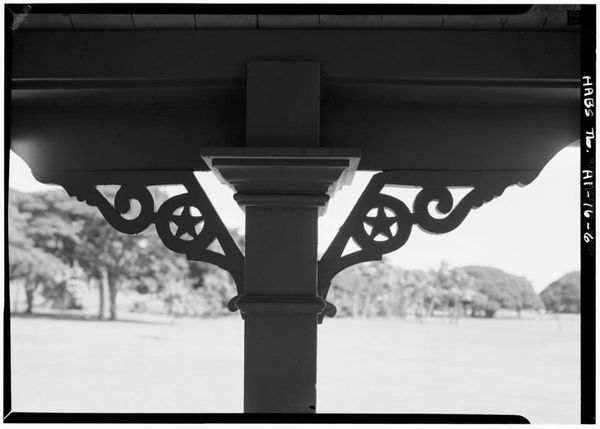
One charming bracket does not make a Victorian. On her outside she must show at least three distinct Victorian features, such as a turret, fishscale shingles, a spindlework frieze, turned porch posts, sawn brackets, window hoods or a bracketed cornice, and at least one of them must be true ornament or patterned walls, not merely her shape. A Folk Victorian must show three different kinds of trim on top of her simple shape.


She must keep her character
I follow the standard of the National Park Service, whose National Register guidance holds that a house shows its style only if it keeps most of the features that make that style. New siding is forgivable when her shape, windows and trim survive. A house that keeps only her outline, with her ornament stripped away, is no longer the lady she was, and I shall not pretend otherwise.
I watch for impostors
Some houses are new ones dressed in Victorian lace. Others belong to later fashions: the Craftsman bungalow, the Foursquare, the Colonial Revival. They may be lovely, but they are not Victorian, and I do not introduce them as such.
Two inspections, line by line
Every house is inspected twice, separately, against a full checklist: her year, her photographs, her shape, every Victorian feature one by one, and every style in turn. Both inspections must agree that she is Victorian, and the lower of the two ratings is the one that counts. Then everything I write about her is checked three times, separately, against every one of her photographs and her listing, so that not a single word is a guess.
An inspection, shown
Here, darling, is exactly how I inspected a lady in Richmond, Virginia, each feature numbered as I noted it.
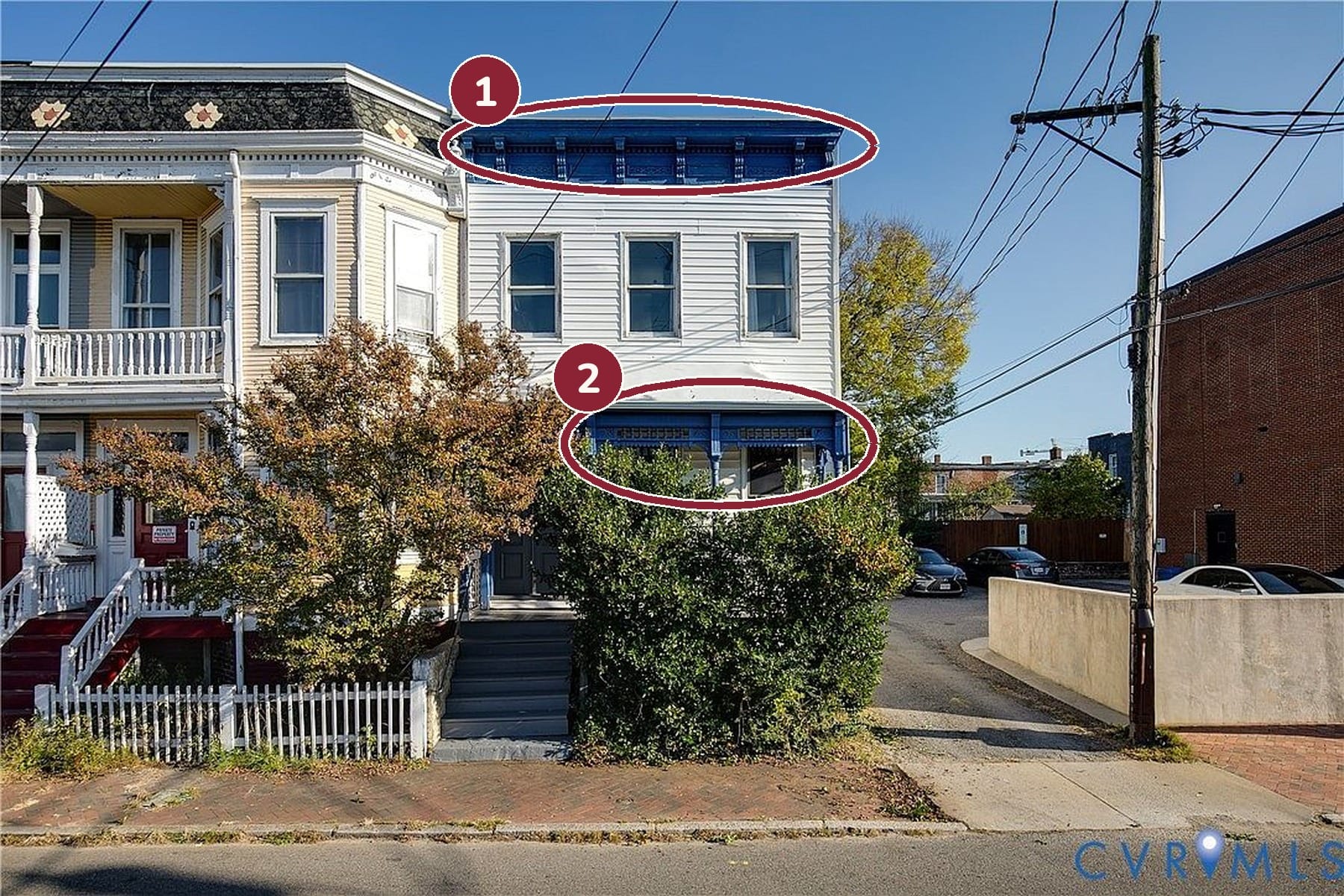
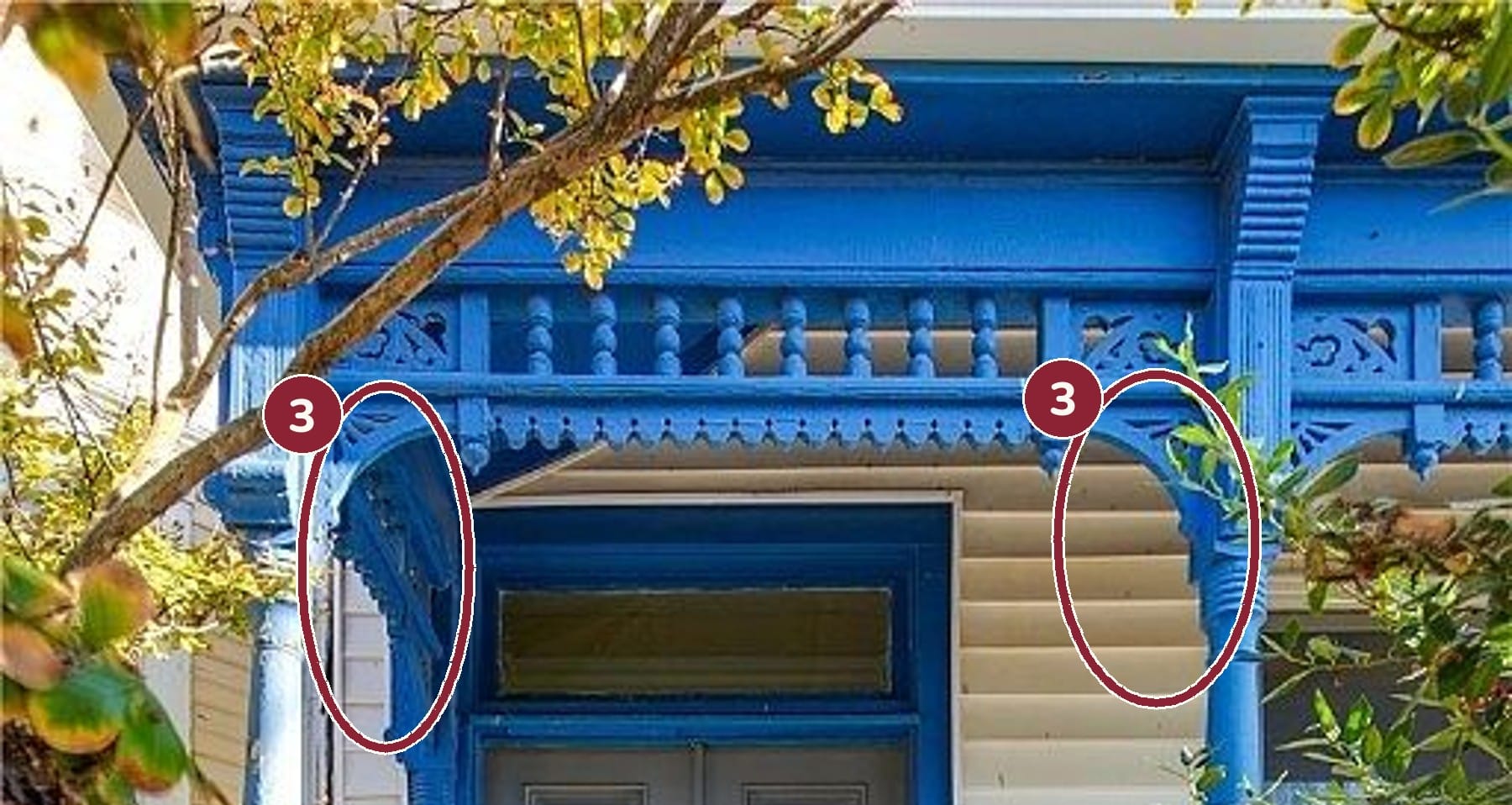
- Her defining feature: a bracketed cornice across her whole front, the mark of an Italianate town house.
- A one-storey porch across her full front.
- Sawn brackets curving from each porch post, true ornament.
Her defining feature plus two more, one of them true ornament: she is an Italianate. Her siding and windows are newer, which costs her one of her six qualities, so I say she reads as an Italianate rather than declaring it outright. Meet her here.
And why does another lady pass without a style name? A house in Newport, Kentucky, wears brackets beneath her front cornice, crowns over her upper windows and a leaded stained-glass transom: honest Victorian features, so she earns her place. That bracketed cornice whispers Italianate. But she stands on her own, and behind her front I find a flat roof with no overhang at her sides, and the standard I follow does not settle whether that counts. So until it does, I call her a Victorian-era home and name no style. A guess would be a compliment she has not earned, and I do not hand those out.
When I name her style, and when I do not
When her defining feature is plain to see, I name her style. When she is unmistakably Victorian but wears no single style clearly, I call her a Victorian-era house and tell you why. I would rather be honest than flattering.
Not every lady keeps her original dress, darling. A century of living brings new siding, new windows and rebuilt porches, and with them go the very details that named her style. So I choose my words with care. If I cannot quite confirm one point, she "appears to be" a Queen Anne or "reads as" an Italianate. If her dress has been altered but her character survives, she "retains her Queen Anne character". And a lady whose photographs can no longer prove any style is simply Victorian-era, and still well worth knowing.
I tell you the truth about her
Every word I write comes from her photographs or her listing, nothing invented. Where she has been altered, I say so kindly. And when a lady is spoken for, I mark her sold and keep her portrait here for admirers.
Once she has passed every test, and only then, I take you inside. Her rooms never decide her style, but they are where a house tells her story, and I tell it with relish: my honest opinion of every parlour and staircase, and enough of a picture that you can imagine yourself pouring the tea.
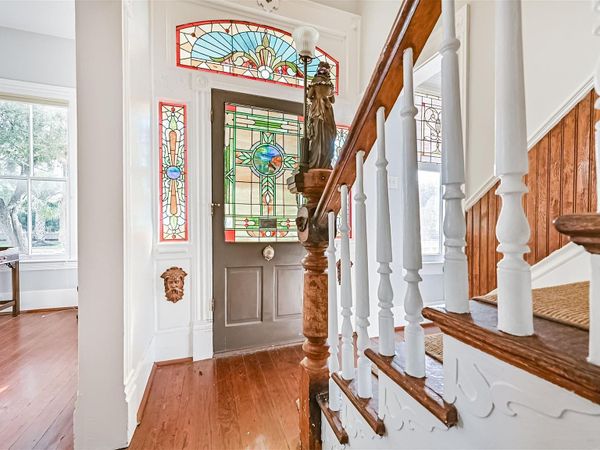
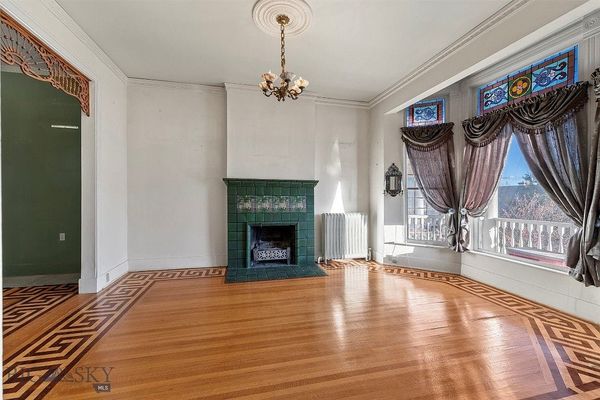
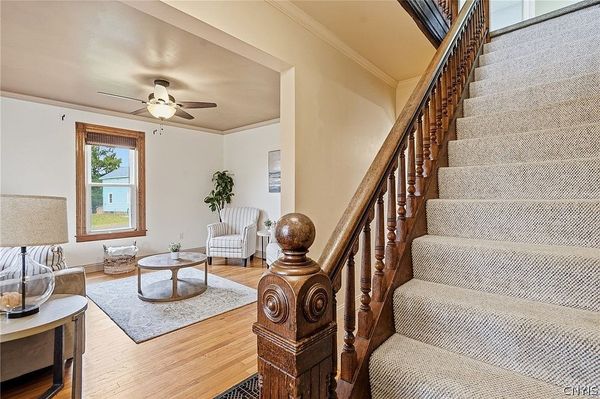
So when you meet a house in The Cresting Chronicle, you may trust that she has earned her place.
Ever your devoted inspector,
