The Second Empire Victorian: Why Americans Called Her the General Grant Style
Americans of her day thought her thoroughly modern and gave her a military nickname. The story of the Second Empire house, her disputed dates, and three traps in judging her mansard.

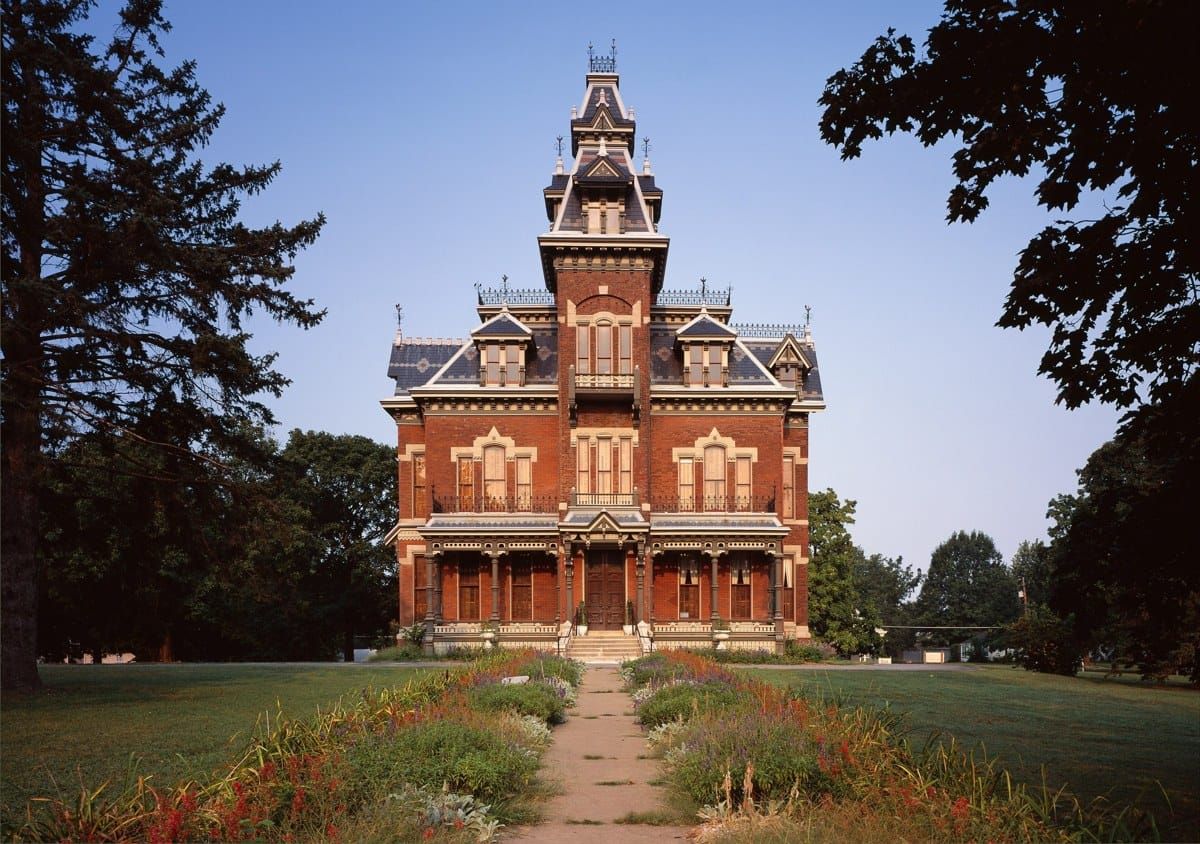
Dearest reader, every season has one lady who arrives in a hat so tall that the whole room turns to look. In the Victorian years she was the Second Empire house, her hat was the mansard roof, and Americans thought so well of her that they gave her a nickname.
Modern, not a revival
Americans of her day saw the Second Empire style as modern rather than a revival of anything, and they nicknamed it the "General Grant style", says the Pennsylvania Historical and Museum Commission. I adore that. While other ladies of the age were busy reviving older fashions, she was simply the latest thing, and everybody knew it.
The most disputed dates of any style
Her dates vary more from source to source than any other style's. Pennsylvania gives 1860 to 1900, very popular in the 1860s and 1870s. The Washington state preservation office heads its page 1870 to 1890 but places her American peak at roughly 1855 to 1885, with a fade after the Panic of 1873 and a late tail in the Pacific Northwest into the mid-to-late 1880s. Vermont says the 1870s and 1880s. The encyclopaedia gives 1865 to 1900 and names her earliest American example as the Hart M. Schiff house in New York, of 1850. Six sources, six opinions: the recording of fashion is clearly no more orderly than fashion itself.
She was most common in the Northeast and the Midwest, less common on the Pacific coast and rare in the South. So I treat a Second Empire lady in the Deep South with a little extra care: a regional surprise lowers my confidence, though it never rules her out.
The mansard, and only the mansard
The mansard is "the defining feature", says Pennsylvania, and Vermont puts it more firmly still: "a Second Empire structure always has a mansard roof". It is a roof with a flat top that encloses the upper storey, with windows set into its steep, often flared sides. The Washington office describes it as four-sided and double-pitched, with a steep lower slope pierced by dormers. Her must-see is that roof over her main block, with dormers in the steep lower slope.
Then her jewellery, which is generous: wood-shingle or patterned slate roofs; iron cresting; heavily bracketed cornices; ornate hoods; elongated paired windows with arched, pedimented or dentiled surrounds; bay windows; quoins; balustrades; a square tower; and a central pavilion projecting at the entrance, with double doors. Buffalo adds multicoloured slate or tinplate and arched double entry doors with glass in their upper panels. I want her mansard plus at least two of these, and one of the two must be ornament: decorative window surrounds or hoods, bracketed eaves, cresting, patterned roofing, quoins or balustrades.
An entire floor beneath her brim
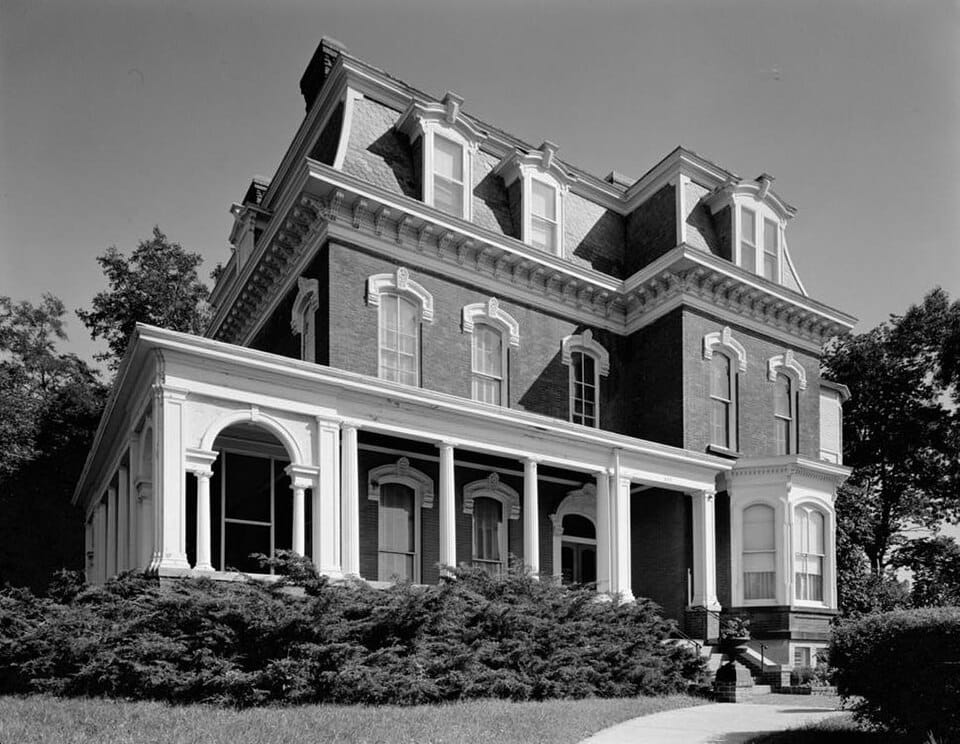
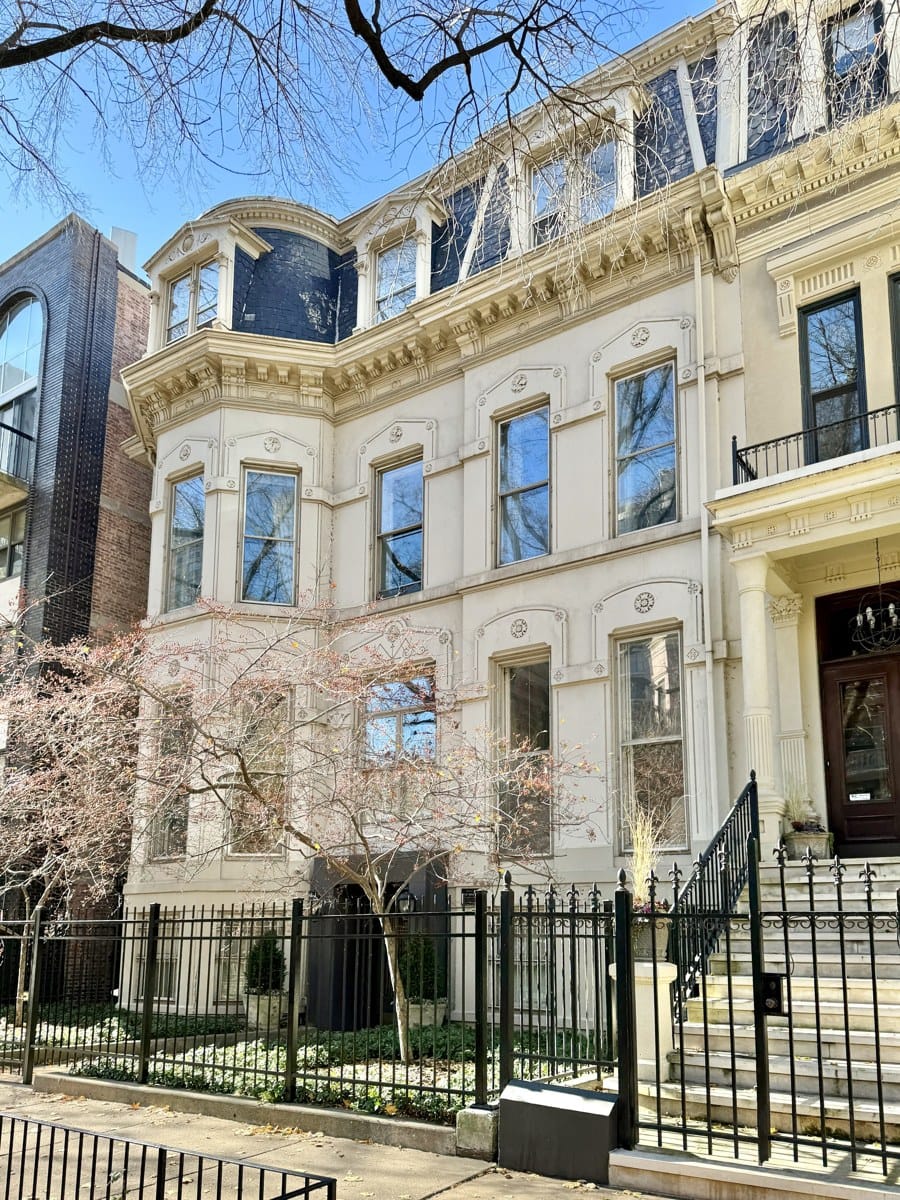
My favourite of her forms is the town house. Secondhand summaries of McAlester's field guide name five Second Empire shapes: the simple mansard, the centred wing or gable, the asymmetrical, the central tower and the town house. In the town house the top floor sits inside the roof, which makes a row of city houses look less massive. A whole floor, hidden in plain sight beneath her brim: I know of no more elegant piece of concealment in all of architecture.
Three traps for the careful reader
First, the tower. Buffalo's rule is that "the mansard roof must be the dominant feature, not a subsidiary one", so a Queen Anne with a gabled main roof and a mansard on her tower is not Second Empire. Italianate towers may carry mansards too, but, as Vermont puts it, they "do not have mansard roofs on the main block of the house". A mansard perched only on a tower belongs to somebody else.
Second, the photographer. A cropped roofline can make an Italianate's low hipped roof under a tower look like a mansard, so I look for a photograph that shows the whole of her roof before I believe it. The two ladies are close relations in any case: many Second Empire houses reused Italianate plans by Davis and Samuel Sloan, "differing only in the presence or absence of a mansard roof", with the Second Empire favouring a central focus.
Third, and most serious, the added mansard. Owners of Italianate, Colonial and Federal houses often added one, with French ornament, and that cannot be seen from the street. No photograph can prove a mansard is original; for that one needs records, attic framing or old photographs. So I judge her as she stands today, and I never claim her hat was hers from birth.
What she cannot lose
Her fatal losses are plain: the mansard replaced or covered by another roof form, a mansard found only on a tower, or the dormers in her lower slope removed. A new roof surface, asphalt where there was slate, costs her the patterned roof but not her name. For her whole wardrobe, see the Second Empire style guide.
If a mansard makes your heart beat a little faster too, dearest reader, come and join me. There is no charge, and each week I write to you about the Victorian houses I would most like to see happily married to a new owner.
Tipping my bonnet to every mansard in town,

Sources: Pennsylvania Historical and Museum Commission, Second Empire; Washington DAHP, Second Empire; Buffalo Architecture and History, Second Empire; University of Vermont, Landscape Change Program; Wikipedia, Second Empire architecture in the United States and Canada.