The Shingle Style Victorian: An Envelope of Space on the New England Coast
Most Victorian ladies dazzle with jewellery. The Shingle lady relies on one beautifully cut cloak of wooden shingles. Her story, her coasts, and how to know her.

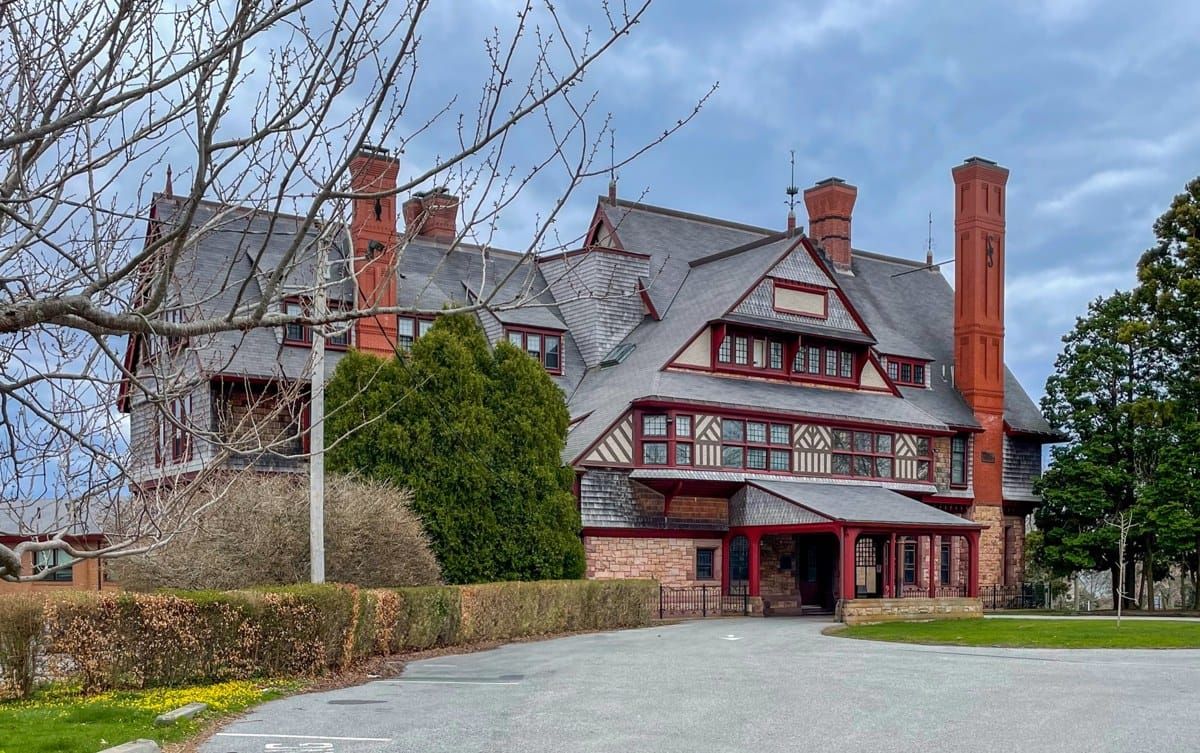
Dearest reader, most Victorian ladies dazzle with their jewellery. The Shingle lady relies instead on the cut of one splendid cloak of wooden shingles, and she needs nothing more. Let me tell you why she is so admired, and how to know her.
An envelope of space
The encyclopaedia says her houses read as "an envelope of space, rather than a great mass", and I cannot improve on it. The Washington state preservation office describes "a near uniform sheath of wooden shingles covering the building from top to bottom" and speaks of her "strong low, horizontal continuity". Her eaves sit tight to the wall, so the cloak runs unbroken.
Her disputed birthday, and her name
Her birthday is disputed. Washington gives 1885 to 1910, says she developed on the New England coast in the 1880s, and finds her best Pacific Northwest examples in the 1890s. The encyclopaedia's examples run from H. H. Richardson's William Watts Sherman House in Newport, of 1875 to 1876, to 1897. Her name came very much later: Vincent Scully coined "Shingle Style" in his 1949 dissertation, The Cottage Style.
It pleases me that the encyclopaedia's first example is by Richardson himself, the same gentleman whose heavy round arches the Shingle lady borrows now and then. A family resemblance, one might say, between a lady in stone and a lady in shingles.
She is disputed as to what she is, too. Washington calls her transitional between the Queen Anne and the Colonial Revival, while Scully's naming treats her as a distinct American style. I shall leave the scholars to settle it over the port.
Where she is found
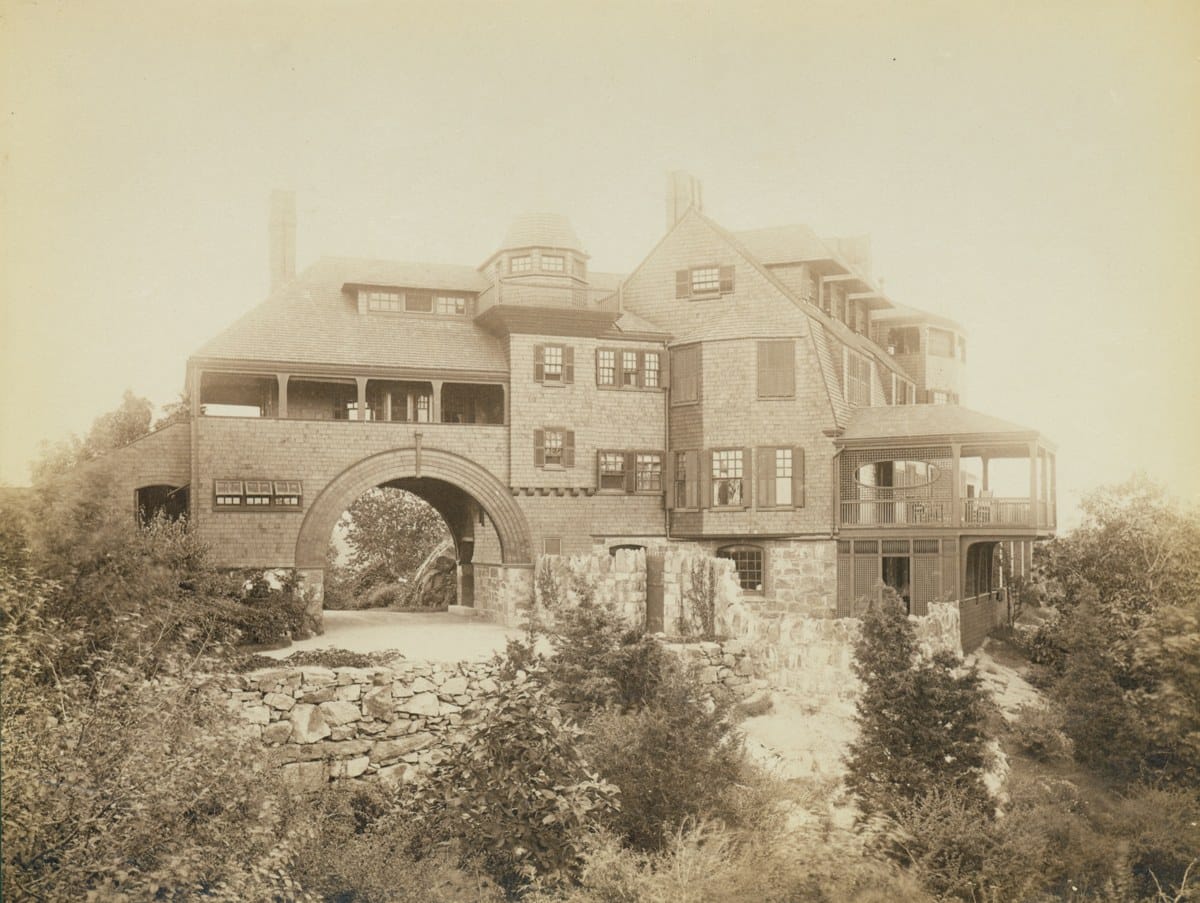
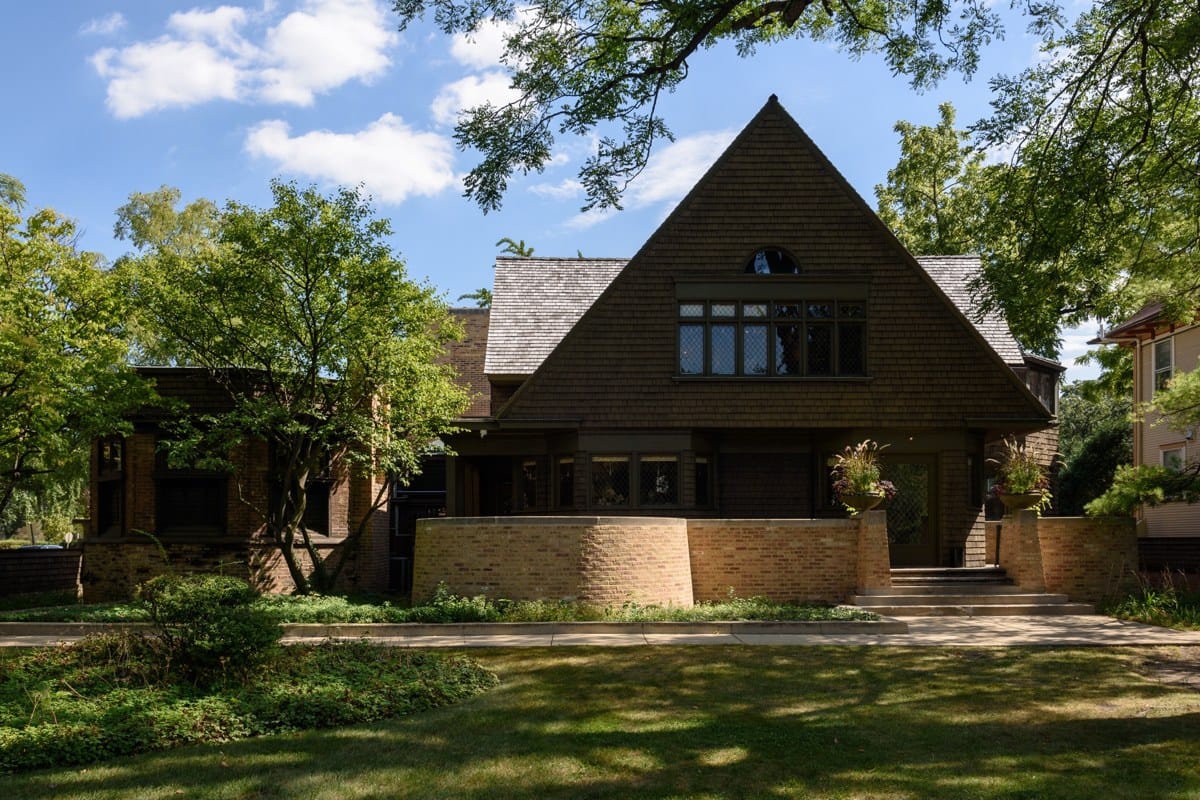
Her examples gather on the New England and Northeast coasts: Newport; Kragsyde at Manchester-by-the-Sea; the William Low House in Bristol, of 1886 to 1887; Long Island; Tuxedo Park; and coastal New Jersey. She went inland too, to the Midwest suburbs, where Frank Lloyd Wright's Oak Park house of 1889 is counted among her examples.
How to know her
Beyond her skin, look for one and a half to two and a half storeys on a heavy stone foundation; recessed, rounded windows, often grouped; low, heavy entry arches on short columns; eyebrow or hipped dormers; Colonial Revival touches such as Palladian and oval windows and classical columns; now and then a Richardsonian arch; and broad verandas built into her body. The Washington office sorts her by roof: hipped with a cross gable, side-gabled, front-gabled, cross-gabled and gambrel. The encyclopaedia stresses her gambrel and hip roofs.
I want her continuous shingle skin plus at least two more features, one of them eyebrow dormers, an arched entry or grouped recessed windows. Her first floor may be stone or brick. A shingled tower counts as one of the two, but it is shape, never the ornament that qualifies her.
The ladies she is mistaken for
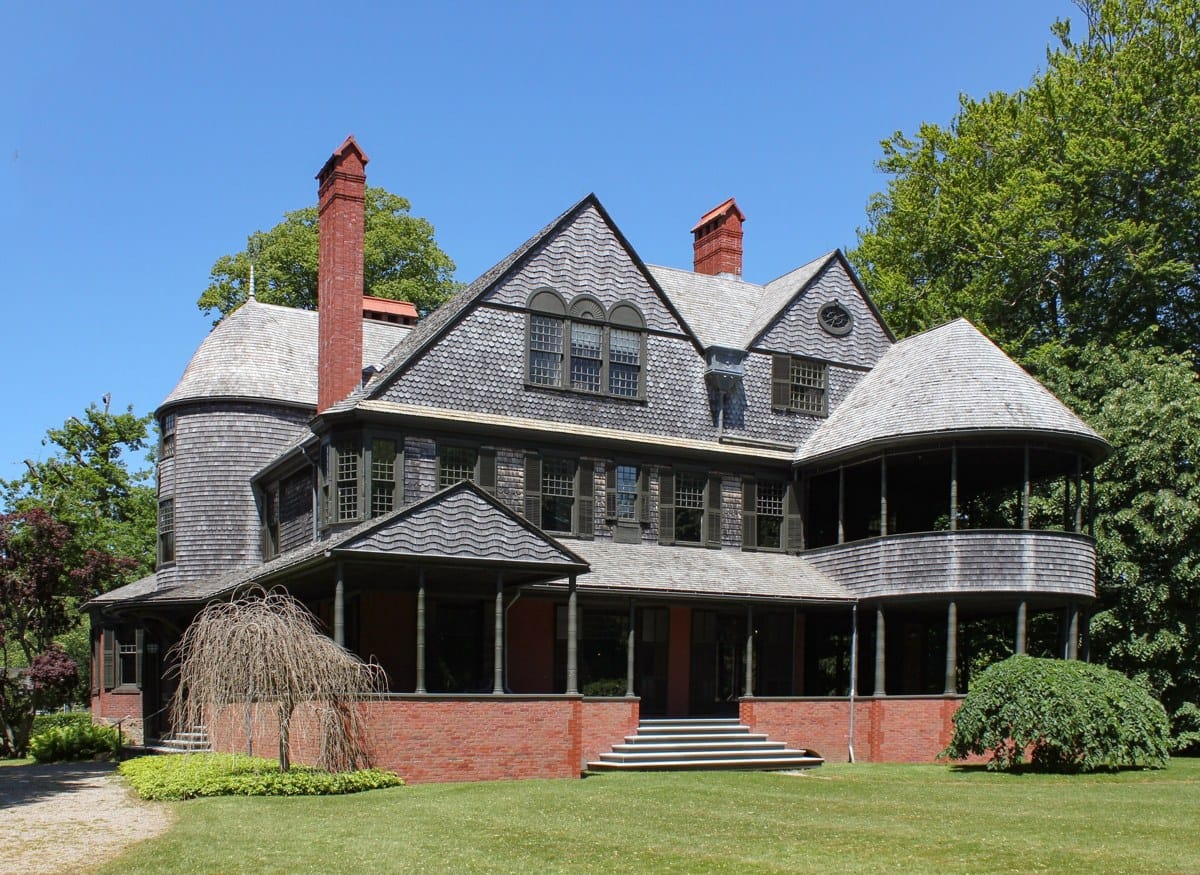
Shingles alone do not make her. The Queen Anne wears them too, but as one panel among several materials on the same wall, whereas the Shingle lady "eschewed the highly ornamented patterns of the Eastlake style in Queen Anne", as the encyclopaedia has it. Stickwork panels rule her out, for they belong to the Stick lady. A masonry body with round arches is the Richardsonian; a shingled wooden body with round arches is most likely our lady.
Her gambrel deserves a word. The Pennsylvania commission says the Dutch Colonial Revival is "distinguished by a gambrel roof", and Washington groups that style with the period revivals of 1920 to 1960. My research reasons that the Shingle gambrel is the one exception to the rule that a gambrel means Dutch Colonial, so I read her skin and her date together before I decide. Put the other way round, a gambrel is a strong sign of the later style only once the Shingle lady has been ruled out.
And her date matters for another reason. She enjoyed a minor revival in the 1970s and 1980s, so before I call a lady Shingle, her date must fall before 1915 and must not conflict with what I see. A shingled house of the 1970s is an admirer of hers, not one of my Victorians.
What she cannot lose
Her fatal loss is her skin: shingles replaced by lap siding. Vinyl shingle panels cost her texture, and then I say only that she appears to be a Shingle house. For the rest of her, see the Shingle style guide.
Should a shingled lady by the sea ever catch your eye, dearest reader, do let me write to you. Joining me costs nothing, and How to Spot a True Victorian comes with my compliments.
Breathing in the sea air and the shingles,

Sources: Washington DAHP, Shingle Style; Wikipedia, Shingle style architecture; Pennsylvania Historical and Museum Commission, Colonial Revival; Pennsylvania Historical and Museum Commission, Queen Anne; Washington DAHP, style guide index.