Stick Style and Shingle Style: The Names That Came Later, and How to Tell the Sisters Apart
Nobody who built a Stick house called it one. Where the Stick and Shingle names came from, what stickwork really is, and how to tell the two sisters apart on sight.

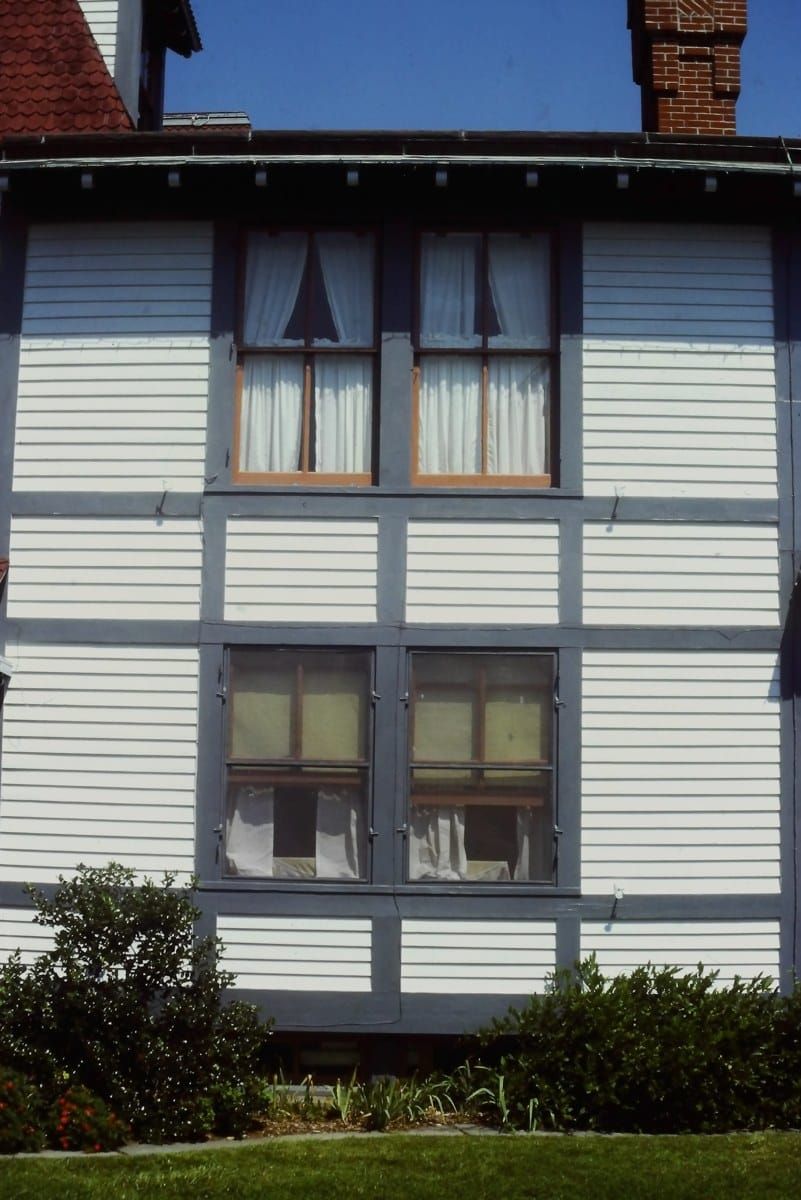
Dearest reader, here is a secret for your next dinner party. No carpenter who laid flat boards over a clapboard wall in the 1870s called his work "Stick Style", and nobody on the New England coast in the 1880s ordered a "Shingle Style" cottage by that name. The names arrived long after the houses. The houses, happily, never waited for them.
Named by a scholar, in 1949
Both labels are retrospective. They were coined by Vincent Scully in his 1949 dissertation, The Cottage Style. So when we speak of a Stick house we are using a scholar's word for a builder's work, which I find rather touching: these ladies went most of a century without a proper introduction, and then were given two at once.
The scholars still differ, very courteously, about what the sisters are. Washington State's Department of Archaeology and Historic Preservation calls the Shingle house transitional between the Queen Anne and the Colonial Revival, while Scully's naming treats her as a distinct American style. The same office places the Stick house between Carpenter Gothic and Queen Anne, "into which it evolved by the 1890s". A lady standing between two fashions, then, who became the second.
What stickwork is
Stickwork is the whole point of her. The Washington office describes it as "expressive wood facing and ornament that evokes the grids and angles of structural framing". In plain words, narrow planks that hold nothing up are laid over the clapboard to divide the wall into panels. The encyclopaedia adds that the boards run mostly at right angles and sometimes on the diagonal, imitating half-timbering. She wears the look of her framing on the outside, purely for effect, and I have never once thought the less of her for it.
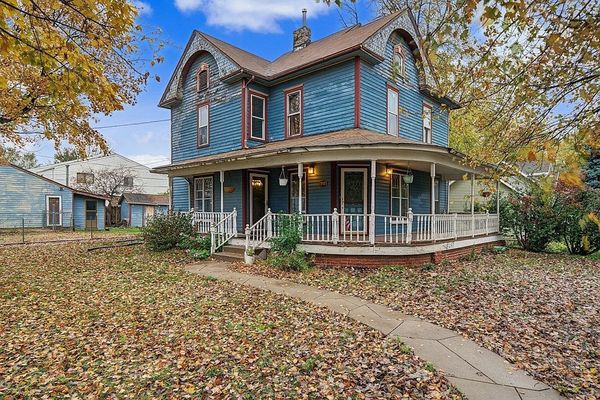
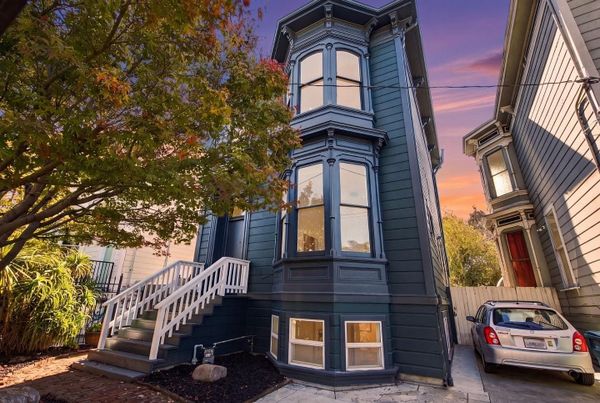
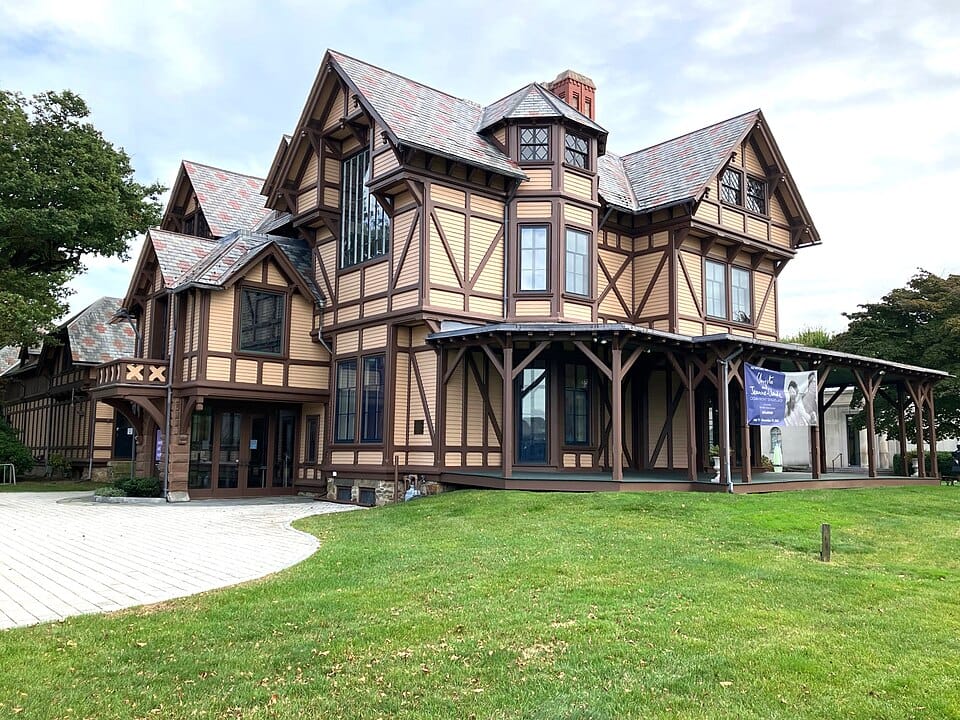
Her companions confirm her: a strong vertical emphasis, with tall windows, steep roofs and towers; complex, angular roofs with intersecting gables; one-over-one or two-over-two windows, often paired within the grid; diagonal boards; wraparound porches and spindles; and trusses or decorative shingles in her gables. Her porches may stand on diagonal or curved braces. In Washington's own tidy phrase, "Stick style buildings are angular", and that angularity is her bearing.
Where she was built
She is found chiefly in the Northeast and the San Francisco Bay Area, says the National Trust. Washington gives her years as 1870 to 1895, says she began in the 1850s and dates that state's Pacific Northwest survivors to the mid-1880s, while the encyclopaedia, citing Palmer, gives 1860 to 1890. Among her best-known examples are the Emlen Physick Estate in Cape May, the Griswold House in Newport, the Dietle and Vollmer houses in San Francisco and the Hinds House in Santa Cruz. She turns up in plainer company too: Wisconsin farmhouses, railroad depots and life-saving stations, among them Chicamacomico, of 1874.
The Eastlake muddle
You will meet a third word in listings, and it is Eastlake. The Washington office says highly decorated Stick houses are "sometimes called Eastlake", with incised vergeboards, fret-sawn railings and spindle-ringed porches, and National Register records use STICK/EASTLAKE as an official category. Buffalo's architectural history site traces the word to Charles Eastlake, the English furniture designer. Since the naming is contested, I follow the careful practice: I name the body first, Stick for her panels, and then add "with Eastlake detailing" for incised, chunky, knob-and-spindle ornament. Eastlake, darling, is a lady's lace and never her surname.
Telling the sisters apart
And so to the Shingle sister. She wears a near-uniform skin of wooden shingles from roof to foundation, her eaves held tight to the wall, with very little ornament. Look at the walls and the question settles itself. Stickwork panels rule out Shingle, and a continuous shingle skin with tight eaves rules out Stick. A grid of boards laid over clapboard is one sister; a seamless shingled cloak is the other.
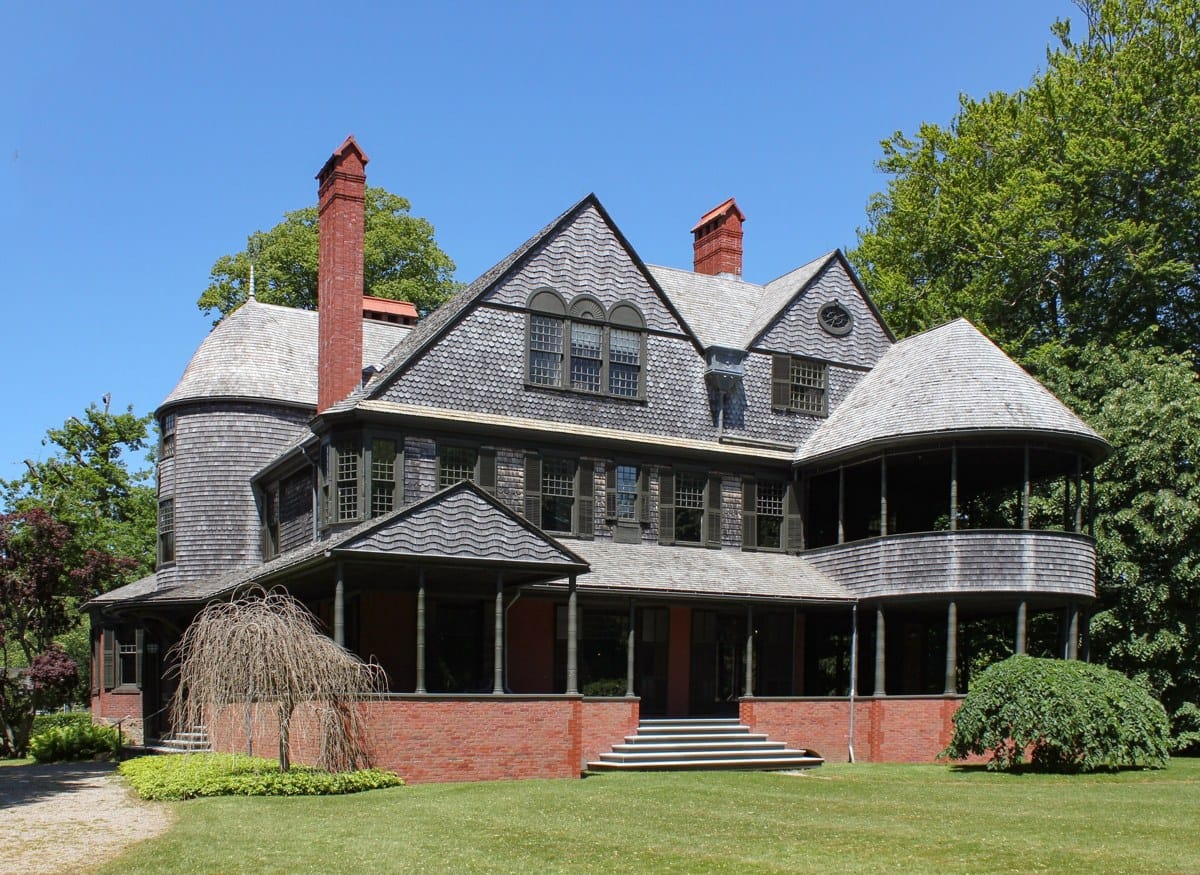
Each sister has one loss she cannot survive. For the Stick lady it is re-siding or stripping that removes or covers her stickwork, because her defining feature is the wall surface itself. For the Shingle lady it is her shingles replaced by lap siding. So when either one is wearing a newer coat, I study her walls very carefully indeed before I say her name.
One later admirer may muddle you. The Craftsman house also has "decorative braces and stickwork", but she gives herself away with a low roof, exposed rafters and tapered columns on piers. She is a lady of the twentieth century, and I am always glad to see her, only never under the wrong name. For the whole of each sister's dress, see the Stick style guide and the Shingle style guide.
Should these two sisters have charmed you, dearest reader, I do hope you will join me. Membership is free, and my Wednesday Miscellany brings a curiosity of this kind every week.
With a fond tap on every panel,

Sources: Washington DAHP, Stick Style; Washington DAHP, Shingle Style; Wikipedia, Stick style; Wikipedia, Shingle style; Buffalo Architecture and History, Eastlake; National Trust for Historic Preservation; Pennsylvania Historical and Museum Commission, Bungalow/Craftsman.